Guide
Plain-language context
432 Hz, chakra symbolism, and old tuning systems often appear together in sound-healing writing. This guide frames them as cultural and reflective context, a rich set of ideas to listen alongside, rather than as physical mechanisms.
432 Hz and tuning history
432 Hz is an alternative reference for the note A, slightly below the modern 440 Hz standard. Concert pitch has wandered across history, and 432 is one of several references musicians have explored, prized by some for a warmer character. Links to Pythagorean ratios and ancient practice are culturally appealing but historically shaky, with no evidence of a single universal ancient tuning.
The chakra framework
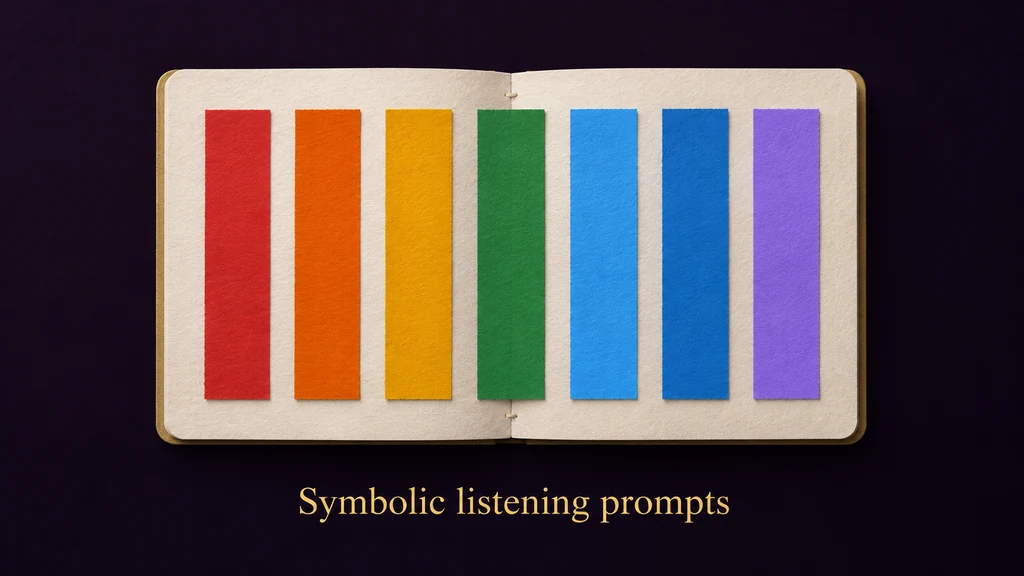
The chakra system comes from Indian yogic and tantric tradition, mapping symbolic energy centres along the body from base to crown, each with a colour, theme, and sometimes a sound. Modern sound-healing guides pair tones with these centres. This is a symbolic body-map, a way of organising reflective attention, not a physiological description. Our piece on chakras and frequencies explores the mapping further.
How to explore it
Pick a centre and theme you want to reflect on, choose a tone you associate with it, and listen softly for ten to fifteen minutes while resting attention on that part of the body and what it evokes for you.
What the evidence says
Neither the special-tuning claims nor the chakra mappings are supported by physical science; they are symbolic and reflective. Held honestly, they offer a pleasant structure for meditation, and any calm you feel is the familiar effect of slow, attentive listening.
Two traditions, one listening practice
This topic braids together two separate strands, an alternative tuning reference and a centuries-old symbolic map of the body, and it helps to keep them distinct. The 432 Hz question is one of musical taste and acoustics; the chakra system is a contemplative framework from yogic tradition. Neither is a claim about physiology, and pairing them is a modern choice rather than an ancient pairing. Recognising this lets you enjoy both as what they are: a tuning you may prefer, and a structure that organises reflective attention.
A gentle way in
Choose a single centre and its theme for a sitting, rest your attention there while a tone you associate with it plays softly, and notice what arises without insisting on anything. Move through the centres slowly across many sessions rather than racing the whole map in one go.
Listening notes
Keep the two ideas distinct as you listen: 432 Hz is a tuning you may or may not prefer, and the chakra map is a structure for attention. For a session, choose a single centre and its theme, rest your attention there while a tone you associate with it plays softly, and notice what arises without forcing anything. Move through the centres slowly across many sittings rather than racing the whole map at once. Comfortable volume, unhurried pace, and personal honesty are all the practice asks.
Listen with this
If this piece sparked your curiosity, a few tones sit naturally alongside it: 432 Hz Natural Harmony, 396 Hz, 963 Hz. Try one softly, in a quiet moment, and notice what shifts for you. There is no need to listen to all of them, and no right order to explore them in; the most rewarding tone is usually the one whose character or story you find yourself returning to.
Sources
General research on calm music and meditation provides the only relevant, and preliminary, context. The honest picture is that the evidence is early and mixed, and findings are preliminary and context-specific rather than settled. The cited music overview concerns music-based interventions. That context does not establish a result for one isolated pitch. We share these links so you can read the primary sources and form your own view rather than take any claim, including ours, on trust.
Listening safely
Whatever you explore here, a few simple habits keep the practice gentle and comfortable. Choose a volume you could easily talk over, give yourself a short, unhurried session rather than a marathon, and sit or lie in a supported, comfortable posture so the body can settle. Let attention rest lightly on the breath or the sound, and step away the moment anything feels grating or unpleasant rather than pushing through. Above all, approach it with curiosity and patience: notice what genuinely settles you, keep that, and let the rest go. This is an educational listening practice, not medical advice or a replacement for professional care.
Listen without turning context into a promise
The related tone buttons below are audible listening examples. Press Play deliberately, begin quietly and pause when you want. A traditional name, simulation or whole-music study is not proof of a clinical effect from the displayed pitch.